Fu-family Illusion

傅氏幻术

National Intangible Cultural Heritage · the lineage behind Ruxianguli

中文English

Back

  1. IThe Letter1993
  2. IIOriginsBeijing · Changshou
  3. IIIThe PrinciplesFive pairings
  4. IVLineageFour Generations
  5. VThe PeopleEight Figures
  6. VIInscription and Safeguarding2014 · fourth batch

Fu-family illusion is a visual performing art that uses concealed technique to produce illusions and apparitions. It is one branch of traditional Chinese illusion and a National Intangible Cultural Heritage, in the category of traditional sports, games and acrobatics. Its centre of transmission is the Fu family; the region of record is Beijing, and it has spread to East, South and Northeast China. The name carries a single surname, but what has been handed down is more than one family’s craft: the natural sciences and the humanities meet here, and creation, research, performance, prop-making and teaching are one undertaking, not five.

The generations of this school are counted from the grandfather, Fu Zhiqing. Fu Zhiqing studied both Chinese and Japanese illusion and brought the family into the art; in the second generation Fu Tianzheng and Fu Tianqi each took a master, and from then on the Fu family made its living from illusion; the third generation is the brother and sister Fu Qifeng and Fu Tenglong; the fourth includes Fu Tenglong’s son Fu Yandong, and Ruxianguli. The great-grandmother, Madame Li, practised the tangram rather than illusion, and is recorded as the origin rather than a generation. What the national register records is the line of representative inheritors: Fu Tenglong in the third generation, Fu Yandong in the fourth.

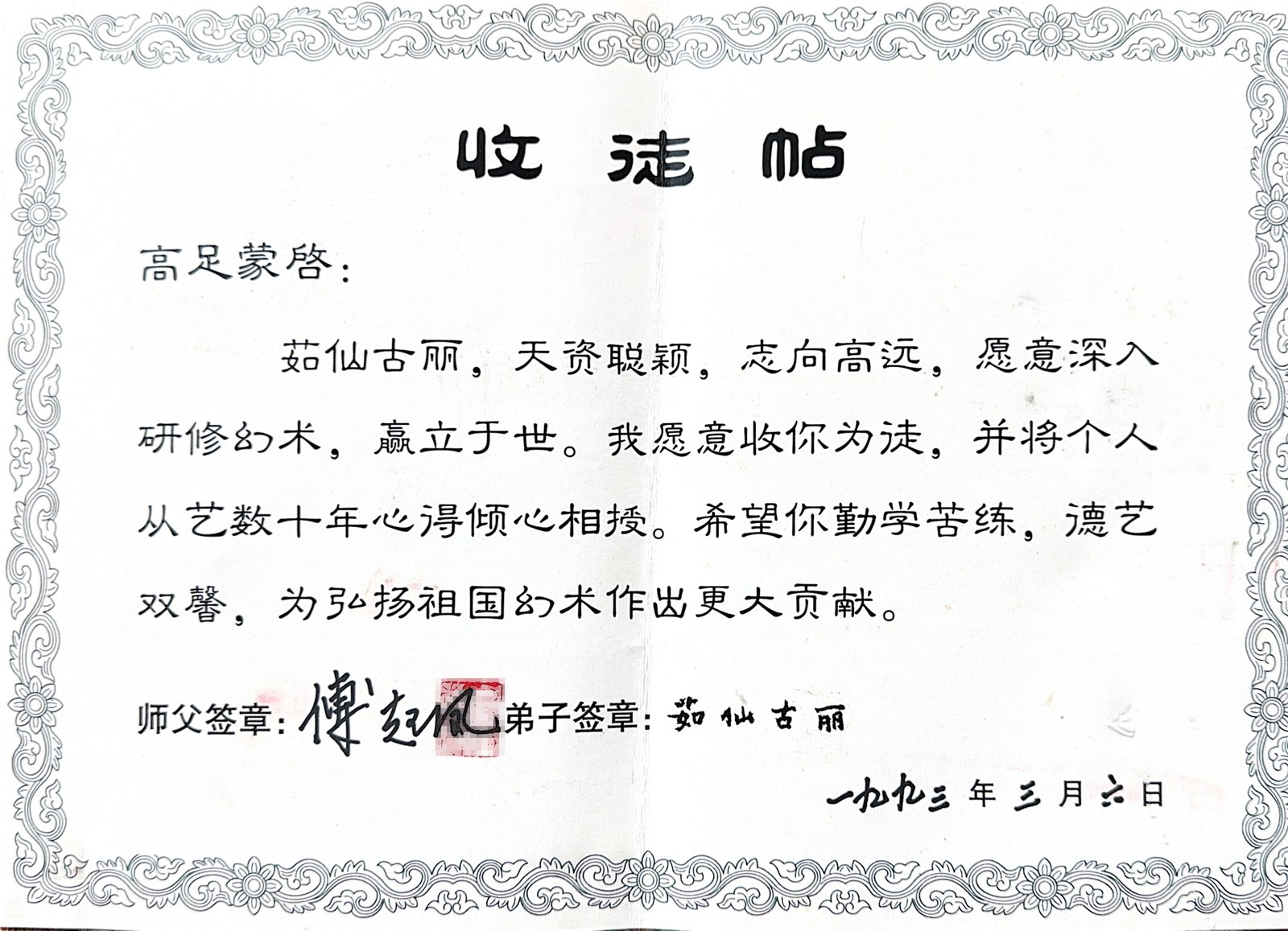
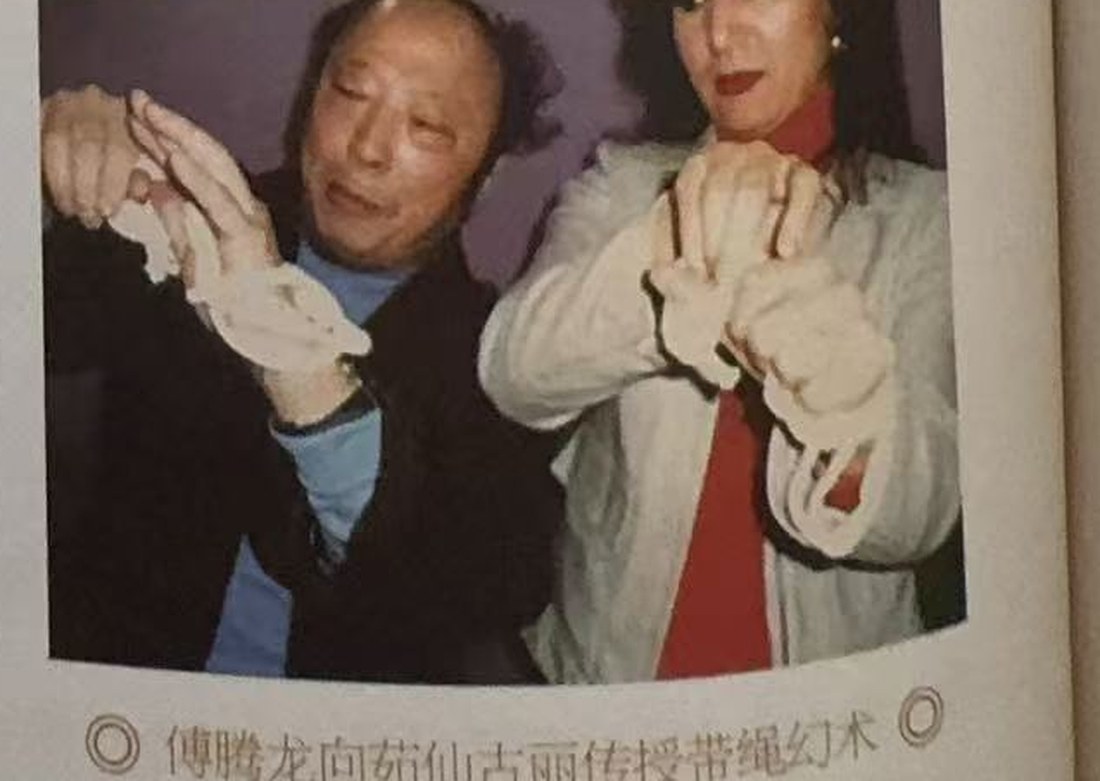
A handwritten Letter of Acceptance wrote Ruxianguli into this school, signed and sealed by master and disciple; with her it reaches the fourth generation. The letter settled the formal standing; what actually taught her was the family. Fu Qifeng took her into the school, and Fu Tenglong passed the rope illusion to her with his own hands; Fu Yandong, of the same fourth generation, trained beside her and grew up with her.

The Letter

Act I · The Letter

The original Letter of Acceptance of 6 March 1993, in Fu Qifeng’s own hand, signed and sealed by the master and signed by the disciple Ruxianguli

Proof of lineage · the Letter of Acceptance

To my student: Ruxianguli is gifted and sets her sights high, and wishes to study illusion deeply and make her name in the world. I am willing to take you as my disciple, and to pass on to you, without reserve, what I have learned in several decades in this art. I hope you will study hard and practise hard, that your character will match your skill, and that you will do still more to carry Chinese illusion forward.

Signed and sealed by the master, Fu Qifeng · signed by the disciple, Ruxianguli
6 March 1993

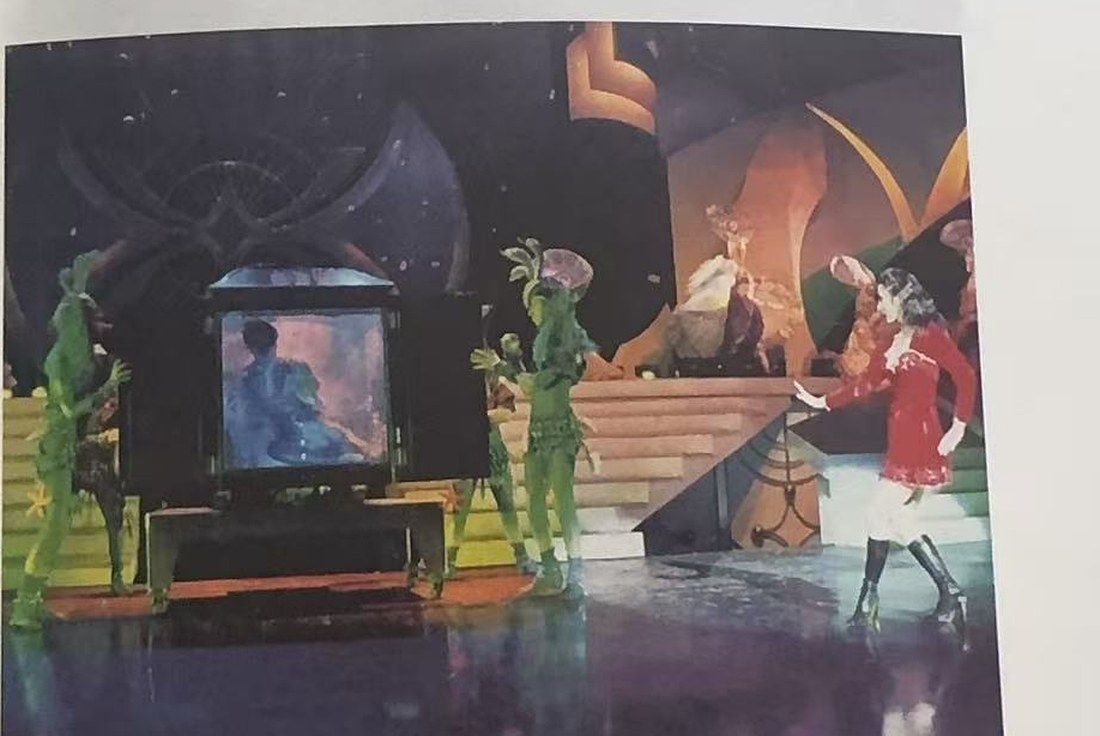
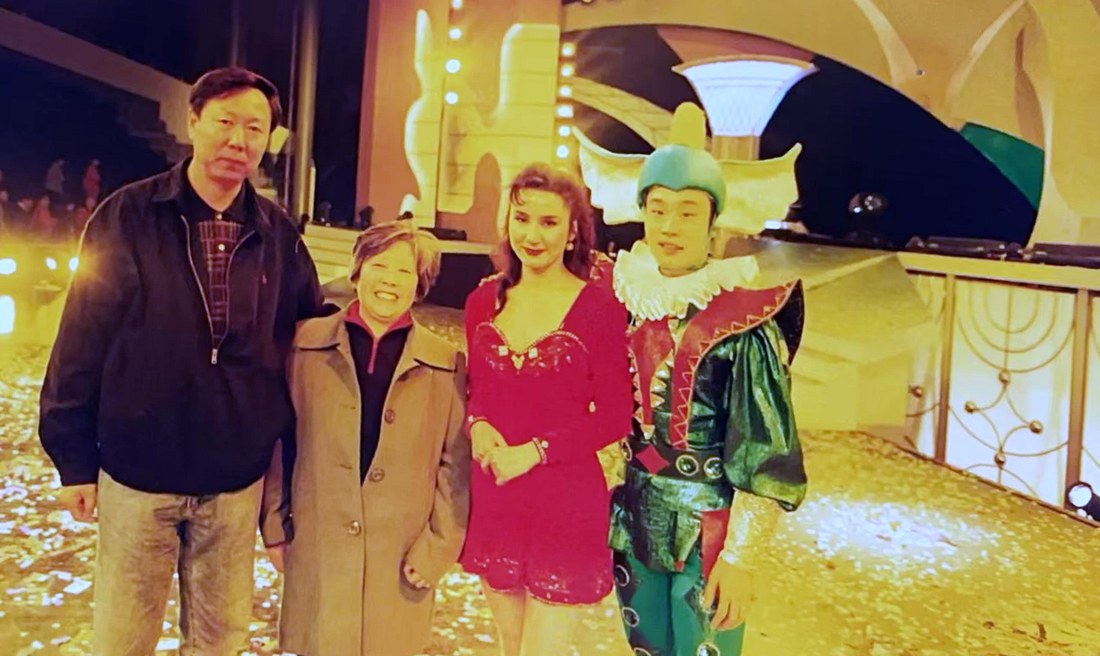
Happy Valley Shenzhen, after the curtain call, the stage strewn with gold confetti; from left: a man, Fu Qifeng, Ruxianguli in a red sequined dress, and a performer in jester costume
Fu Qifeng · Ruxianguli

Origins

Act II · Origins

This school took shape at Beijing's Tianqiao in the late nineteenth century, blending Chinese and Western methods and drawing together the northern and southern traditions — that is the origin recorded in the national intangible-heritage register.

The Fu family came originally from Shanxi, a household of scholars and physicians. Fleeing war at the turn of the Ming and Qing, one branch moved to Macheng in Hubei; later, carried along by the great westward migration into Sichuan, they settled in Changshou county — today's Changshou District of Chongqing — in the early Jiaqing years. Their distant forebear Fu Shan, also known as Fu Qingzhu, was a scholar of that same age, at home in philosophy, medicine, Confucian learning, poetry, calligraphy, painting, epigraphy, martial arts and textual criticism; his Fu Qingzhu’s Gynaecology and Fu Qingzhu’s Andrology survive, and in his day he was called a sage of medicine. Later generations of the family took him as their model in conduct and in study.

Her great-grandmother, of the Li family, came from a salt merchant's household and practised the tangram; her grandfather Fu Zhiqing studied at Waseda University in Japan, and the register separately records that he also studied both Chinese and Western illusion and drew the family into the art — both are recorded, and neither is folded into the other. By Fu Tianzheng's generation, illusion and the puzzle arts had become one body of family learning: the father, Fu Tianzheng, was a magician and a lawyer; the mother, Zeng Qingpu, followed the puzzle arts and wrote A New Compilation of Puzzle Diagrams.

Fu Zhiqing was the one who opened this door. He studied in Japan in the early twentieth century, and in 1906 founded in Tokyo, with Zeng Xiaogu, Li Shutong and others, the Spring Willow Society — China's first company of the new theatre. Returning home, he founded the Autumn Voice Society in 1913, the first modern arts company established in Sichuan, also called the Reform Theatre Society: spoken drama above all, with monologue, illusion, song and dance besides. He cared not only for performance but for scholarship: he was the first to treat illusion as a subject of study, and he brought his children and grandchildren into the art.
Early in the twentieth century Fu Tianzheng of the second generation took as his master the Beijing illusionist Han Bingqian, and his brother Fu Tianqi studied under Mo Wuqi; from then on the Fu family made its living from illusion. During the war against Japan, Fu Tianzheng created Unbroken, in which a cord cut and restored again and again stood for the Great Wall; it was the piece he always performed when raising funds for the war effort. The school later spread from Beijing to East, South and Northeast China, with the family remaining its centre of transmission.

The Principles

Act III · Principles

From childhood Fu Qifeng believed that illusion was not a street trick but an art with intelligence and culture in it — and that belief is where this school stands. Half of its work happens on stage and half at the desk: for a piece to hold up, one must first understand why it works, then practise until the hands never fail, and only then speak of beauty. The register sums up this approach in five pairings, and in each pair neither side may be let go.

It is a visual performing art in which the natural sciences and the humanities meet: props and mechanism belong to the first, mood and narrative to the second, and both must hold within the same piece. Creation, research, performance, prop-making and teaching are one undertaking here rather than five; that is why the school can speak of scientific, philosophical and aesthetic content, and not merely of making the false look true.

The school also takes seriously the comparative study of Chinese and Western illusion: the provenance of a Western method must be understood, and one’s own methods must be explainable. Whether following tradition or breaking new ground, the aim is a distinctly Chinese character — props developed in-house, skill won by hard practice, one’s master respected, others’ strengths taken in. These sound like old sayings; four generations of the Fu family have spent their lives on them.

Nor is the method of this school a single line. Fu Tianzheng of the second generation followed the northern tradition, studying under Han Bingqian and taking up its manner of patter and sleight together; his younger brother Fu Tianqi followed the southern tradition, becoming a pupil of Mo Wuqi in Shanghai in 1938. One brother north, one south — and from then on the two strands of Fu-family illusion ran together within one household. In 1957 the brothers compiled a joint study of two classic routines, gathering the techniques of both traditions in one place; magicians speak of it still. Drawing widely on others, it turns out, began between brothers.

Study & practice

Scholarship and creative practice, neither above the other

Tradition & renewal

Inheriting tradition and bringing forth the new, neither above the other

Master & peers

Respect for one’s master and learning widely from others, neither above the other

Technique & performance

Illusion technique and artistic performance, neither above the other

Props & training

Prop development and hard-won skill, neither above the other

Lineage

Act IV · Lineage

Fu-family illusion is passed on among members of the family and their disciples. Fu Tenglong is the third generation of Fu-family illusion, trained by his father Fu Tianzheng, and is the school’s representative inheritor of the National Intangible Cultural Heritage; his son Fu Yandong is the fourth generation. The third and fourth generations are taught chiefly within the family while also learning from masters and friends inside and outside the trade — so this is not a closed room.

The fourth generation is more than one person. Besides Fu Yandong, Fu Tenglong's son, there is Xu Qiu, Fu Qifeng's daughter — taught from the age of twelve by her uncle Fu Tenglong, and for more than forty years since a performer, creator, researcher and teacher of illusion; Ruxianguli belongs to this same generation.

A single length of rope shows best how this school passes down. During the war Fu Tianzheng created Unbroken, in which a rope cut and restored stood for the Great Wall, its breaks for the enemy's attacks and its mending for the will of those who resisted; it was the piece he always performed when raising funds. In Fu Tenglong's hands the cut-and-restored rope became a teaching tool: he would openly demonstrate the method, then invite the audience to cut the rope into twenty-four pieces and restore it on the spot. That skill he passed on to Ruxianguli. Three generations, one rope.

Fu Tenglong and Ruxianguli, both in white gloves, facing each other and working a length of rope
Fu Tenglong teaching rope magic to Ruxianguli · from the book on Fu-family illusion

Every generation has founded illusion societies, trained performers, and taken up the pen: across the generations they have published more than sixty works on illusion and related subjects, among them Popular Illusion, Illusion for Entertainment, A History of Chinese Acrobatics and Illusion in Ancient China. A craft can be passed on by mouth, but reasoning that is never written down disperses — this school counts writing it down as part of the transmission.

The People

Act V · The People

First Generation

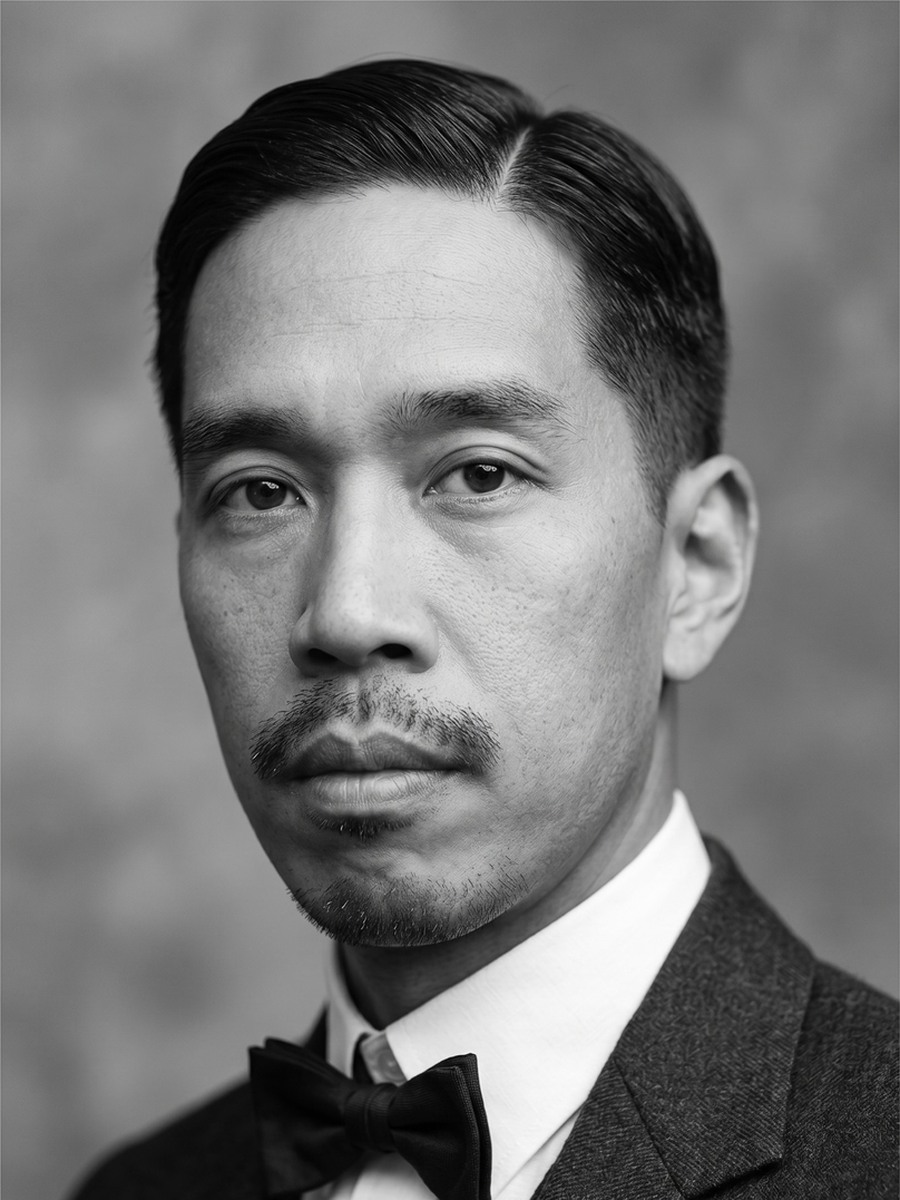
Portrait of Fu Zhiqing in black and white: dark suit, black bow tie, side-parted hair, pale grey ground

Awakening

Fu Zhiqing

1887 — 1940 · first-generation scholar of Fu-family illusion · early Chinese dramatist · noted Sichuan lawyer

The Fu family came originally from Shanxi, a household of scholars and physicians. Fleeing war at the turn of the Ming and Qing, one branch moved to Macheng in Hubei; later, carried along by the great westward migration into Sichuan, they settled in Changshou county — today’s Changshou District of Chongqing — in the early Jiaqing years. Their distant forebear Fu Shan, also known as Fu Qingzhu, was a scholar of that age, at home in philosophy, medicine, Confucian and Buddhist learning, poetry, calligraphy, painting, epigraphy, martial arts and textual criticism; his Fu Qingzhu’s Gynaecology and Fu Qingzhu’s Andrology survive, and in his day he was called a sage of medicine. Later generations of the family took him as their model in conduct and in study.

Fu Zhiqing was born into hard circumstances. His grandfather Fu Shouzhi rose to be prefect of Lanzhou and died in office; his father Fu Xiaosu, a gifted and open-handed man, died after drinking at a gathering of literary friends, only eighteen years old. Fu Zhiqing was born after his father’s death and was raised by his mother, Madame Li. Widow and orphan were badly used in a large traditional household, and the family’s fortunes were falling; out of that came his proud, stubborn character — but he also inherited from his forebears a love of the arts, a love of enquiry, and the readiness to go first.

As a boy in the late nineteenth century he was intensely curious and drew unusual people to him. One day he watched a conjuror pour five saucers of fine sand — red, yellow, blue, white and black — into a tea urn, chanting and drawing charms with one hand while stirring the coloured grains through the water with the other; then he scooped out a handful and returned it to its saucer, and it was all red. Five times over, each colour came out on its own with not a grain of another among them. This is the traditional effect known as separating the five sands. He could not work it out, and for that reason befriended a conjuror nicknamed Gao Baxi, from whom he learned the piece. The coloured sand, it turned out, is roasted and tempered until it has a certain tackiness and will hold together under pressure. There is a saying in the trade that separating the sand is easy and preparing it is hard: preparing it is the touchstone by which old hands test whether an enthusiast really means to go deeper — the grains must be of the right size, special dyes must be found for the five colours, and the heat that makes them cling is harder still to judge. He and Gao Baxi took to each other at once, and besides separating the five sands he added the smaller pieces — the three changes of wine and rice, the cut-and-restored cord — to his store.

He studied in Japan in the early twentieth century, and in 1906 founded in Tokyo, with Zeng Xiaogu, Li Shutong and others, the Spring Willow Society — the first company of the new theatre in China. Returning home, in 1913 he founded the Autumn Voice Society, the first modern arts company established in Sichuan, also known as the Reform Theatre Society: spoken drama above all, with monologue, illusion, song and dance besides, to carry the new arts further. He cared not only for performance but for scholarship:he was the first to treat illusion as a subject of study, and he brought his children and grandchildren into the art.
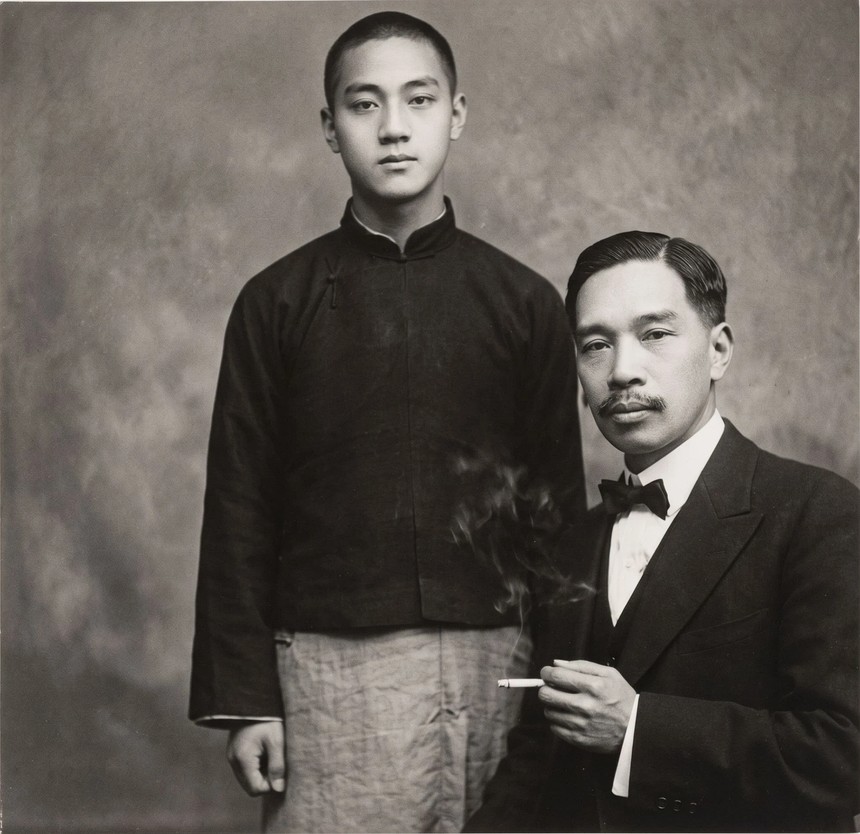
Fu Zhiqing with his second son Fu Tianqi: the youth in a dark jacket standing behind, Fu Zhiqing in front in a suit and bow tie, a cigarette between his fingers
Fu Zhiqing with his second son Fu Tianqi · from the book on Fu-family illusion
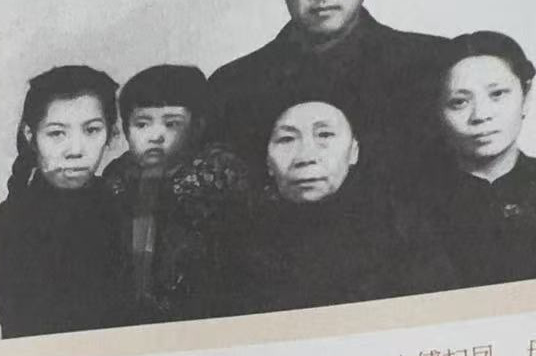
A black-and-white family group of five: a man in round spectacles standing at the back centre; in front, from the left, a young woman holding a small child, an elderly woman in the middle, and a middle-aged woman at the right
From left to right: Fu Zhiqing’s fourth daughter Deyao, his granddaughter Fu Qifeng, his mother Madame Li, his eldest son Fu Tianzheng, and his eldest daughter-in-law Zeng Qingpu · from the book on Fu-family illusion
to be added

Second Generation

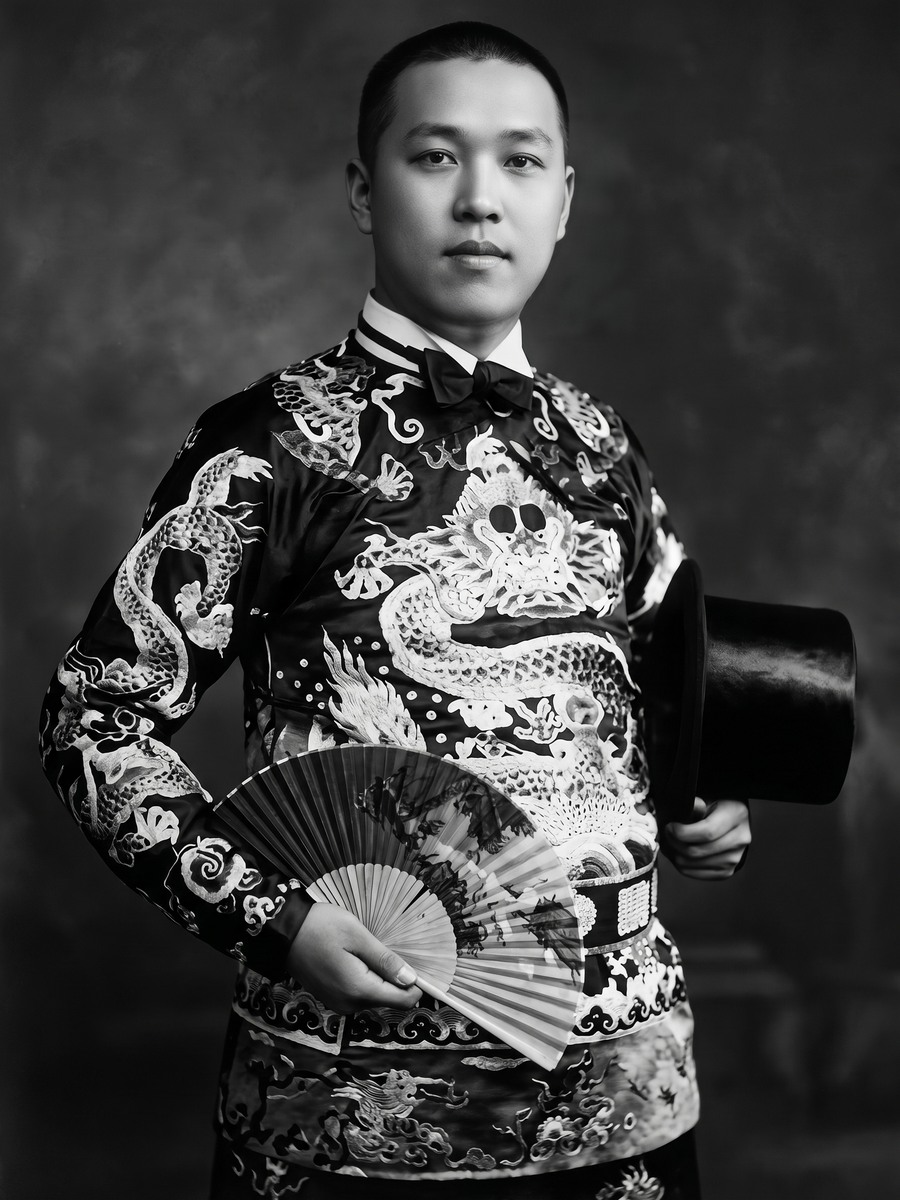
A full-length photograph of Fu Tianzheng in a dragon-embroidered stage robe, holding a folding fan

Northern School

Fu Tianzheng

born Fu Runhua · died 1972, aged sixty-five · eldest son of Fu Zhiqing · head of the Universal Illusion Society · heir to the northern school of the Han line

Fu Tianzheng was the eldest son of Fu Zhiqing. Early in the twentieth century he studied under Han Bingqian, a master of illusion in Beijing, and took up unaltered the northern manner of patter and sleight together. He had four foreign languages, and all his life he honoured science and opposed superstition, holding it the rule by which a conjuror must live: a conjuror must be upright and must not turn the wisdom of his forebears to crooked ends —a man must first set himself straight, and so he changed his given name Fu Runhua to Fu Tianzheng, which carries that sense. There was a second reason: early in the twentieth century a group of Japanese conjurors — Tenichi, Tenza, Tenyu, Tenkatsu — styled themselves representatives of Eastern illusion; he held that the true root of Eastern illusion was in China, and took the name to hold himself to that work.

In 1932 he set out to make his living from the art. To raise money for the Universal Illusion Society he brought in his sister-in-law Cai Yihua and his cousin Chen Xueli as assistants, and his brothers Tianqi and Deguang came to help as well. He often said that people who are not kin can still be kin in the art: when the beginning was hardest, his master’s house in Beiping came to his aid and experienced hands such as Li Tianwei travelled to Sichuan to help; and Mo Wuqi, the doyen of the southern school in Shanghai, thought well of this young man who meant to revive the illusion of his own country, worked with him and gave every help in building a set of large apparatus — the sheep cage, the flying bed, the red-heart box, the immortals’ painted cabinet, the great duck vase, the carrying box, the division box, the triple-cangue box. After more than a year of preparation, in 1937 the society gave its first full programme, “New Wonders of the Age”: large, medium and small illusions — Flowers of the Four Seasons, Phantom in the Sheep Cage, A Riot of Bells, Balls and Pellets, Wardrobe of the Seven Kingdoms, The Immortals’ Painted Cabinet, The Flying Bed — together with song-and-dance numbers such as Carriage Dance and Lovers of the South Seas. The lavish company and the scholarly bearing of the performance were nothing like the street conjuring of the day; audiences in Sichuan had never seen stage work of this kind, and it caused a sensation.

After war broke out he turned illusion into a weapon: he improvised One Heart and Defend Our Land, went in person to Jiangwan in Shanghai to entertain the troops holding the city, and on the road back to Sichuan gave anti-invasion speeches between patriotic performances. Back in Chongqing he created The Magician Joins the Army, Su Wu Herding Sheep, Doihara Cut in Two, Unbroken, Radiant China and Never Forget the Eighteenth of September. From 1940 he joined the chess champion Xie Xiaxun, twenty years his senior — the King of Magic and the King of Chess — in raising funds across the south-west; in 1943, raising winter clothing for the soldiers, he devised a programme with Ruan Zhennan of the south, Ma Shouyi of the centre and Liu Huaying of the north-east, and the four gave a benefit performance in Chongqing attended by Lin Sen, chairman of the Nationalist government, among others. Guo Moruo, Lao She, Hong Shen and Feng Yuxiang all praised him warmly, and Guo Moruo left him an inscription praising the turning of the rotten into the marvellous.

More of the road was hardship. Out of season he taught classes, sold small apparatus and wrote for the press to keep the society fed; on one tour the wooden boat carrying the apparatus capsized and sank in the Min River; on one journey from Chengdu to Chongqing the vehicle went over the edge at Laoyingya, and he slipped out through the window and caught a tree at the roadside. Even so he went on compiling outlines and partial drafts for more than forty volumes on illusion. In the great Chongqing fire of 2 September 1949 he survived only because the whole family was out; the house burned, and years of manuscripts, papers and apparatus went with it. In 1950, at the invitation of his Peking University classmate Guo Yesheng, he took charge of preparing the New China Illusion and Dance Troupe, and in 1951 stepped onto a Chongqing stage again; in 1952 he was elected to the third Chongqing People’s Congress, and at the end of that year moved the family east to Shanghai, opening at the Longmen Theatre.

In 1953 he founded the Tianzheng Experimental Society for the Creation and Study of Illusion, and over the next few years published more than twenty titles, among them Magic for Everyone, Magic Around the World, Card Magic, Chinese Folk Conjuring and The Immortal Plants the Beans, and the Nine Linked Rings, while serving for many years as illusion instructor at the Shanghai Children’s Palace of the China Welfare Institute. In the reorganisation of 1958 the society’s members were all transferred to other work; only he and his son Fu Tenglong went on into the newly formed Shanghai Magic Troupe. In May 1959 he became a director —the first directing post in the Chinese illusion profession, and from then on he left the stage. From 1960 he gave himself to compiling A History of Chinese Acrobatics, and by May 1966 had finished a draft of some six hundred thousand characters; then the Cultural Revolution broke out and the work was destroyed. Released home early in 1972, the first thing he wanted was to restore the manuscripts of A History of Chinese Acrobatics and Studies in Chinese Illusion, saying that five years would be enough to write them again from memory. Five days before he died he was still telling his son to bring his notebooks and foreign reference books to the hospital. Four months after coming home he entered hospital and never returned.

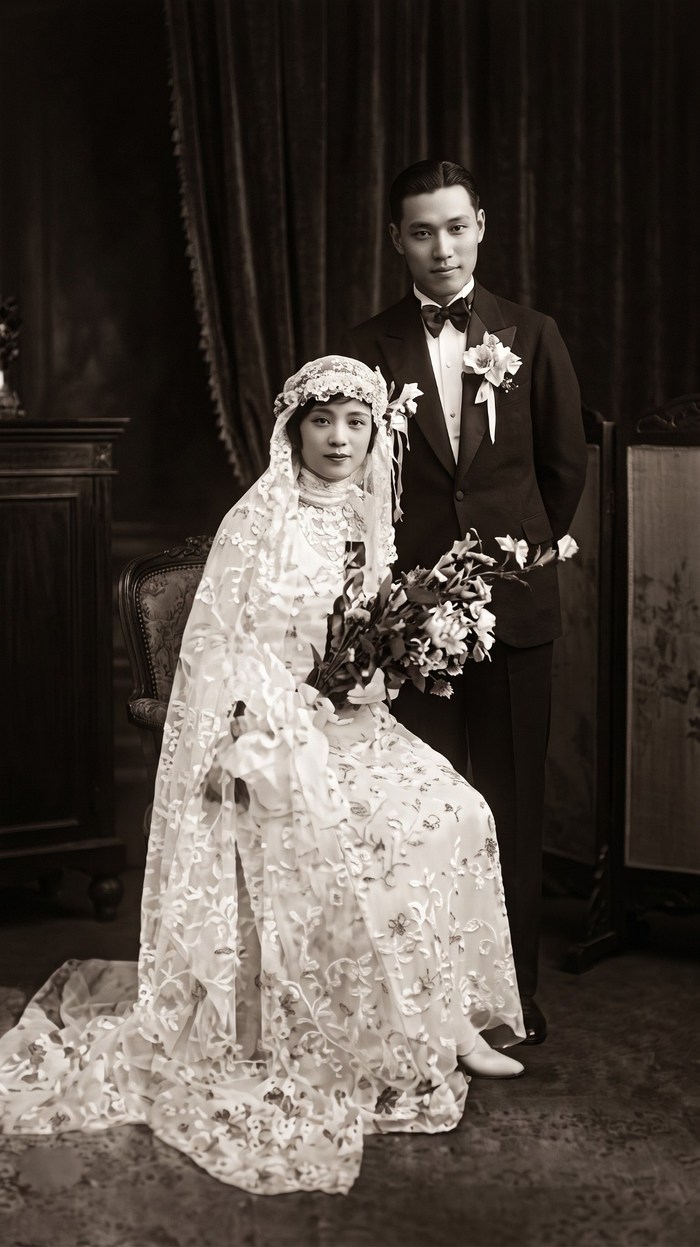
Wedding portrait: the bride seated in a lace veil and embroidered gown holding a bouquet, the groom standing behind in formal dress with a boutonnière
Wedding portrait of Fu Tianzheng and Zeng Qingpu · from the book on Fu-family illusion
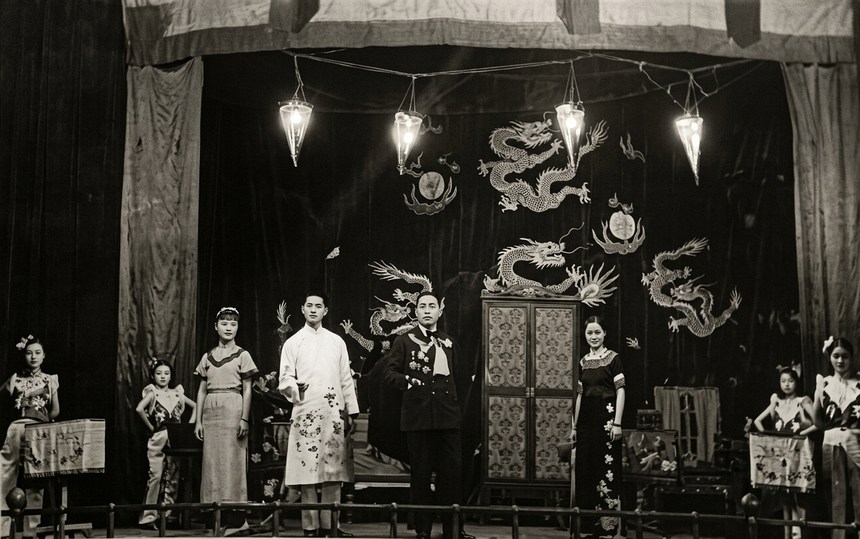
Stage photograph: dark drapes and a twin-dragon backdrop, a row of performers standing either side of the props beneath four hanging lamps
The first programme of the Universal Illusion Society opening in Chengdu, with Fu Tianzheng, Fu Tianqi and Cai Yihua · from the book on Fu-family illusion
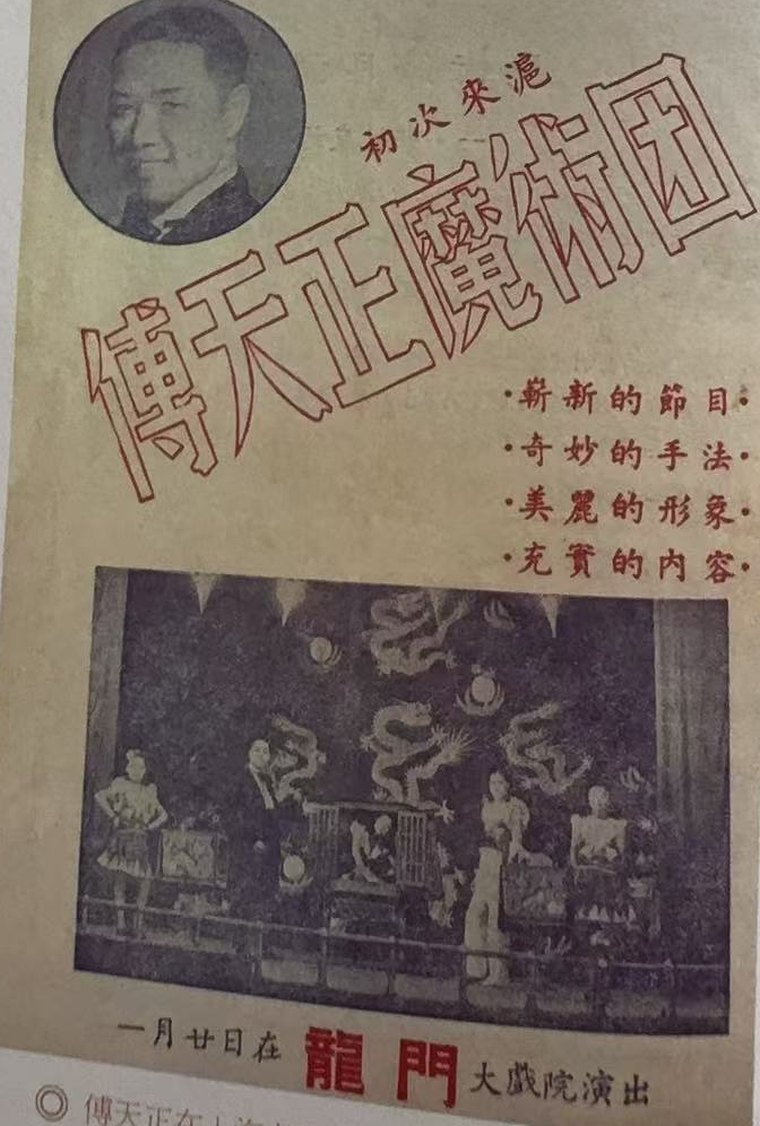
An old playbill: a circular portrait at upper left, the troupe name in red across the middle with four lines of copy, a stage photograph below, and the date and theatre named at the foot
A playbill for Fu Tianzheng’s season at the Longmen Theatre in Shanghai · from the book on Fu-family illusion
Portrait of Fu Tianqi: suit and tie against a pale ground

Southern School

Fu Tianqi

born Fu Deyong · 1910 — 1977 · second son of Fu Zhiqing · painter, calligrapher and conjuror · heir to the southern school of the Mo line

Fu Tianqi was the second son of Fu Zhiqing. He was gifted from childhood, with a strong hand in calligraphy and painting, free in temperament and impatient of constraint; he worked freelance all his life — designing advertisements, making book covers, selling his writing and painting, compiling books — and performed illusion in his early years alongside his elder brother. He left Fudan University in Shanghai in 1932; in 1938 he became a pupil of the southern master Mo Wuqi in Shanghai, and performed in Shanghai, Hong Kong and South-East Asia under the family’s Universal Illusion Society name, to considerable acclaim. In the later years of the war he returned to Sichuan to join his brother, and the two performed together across the south-west.

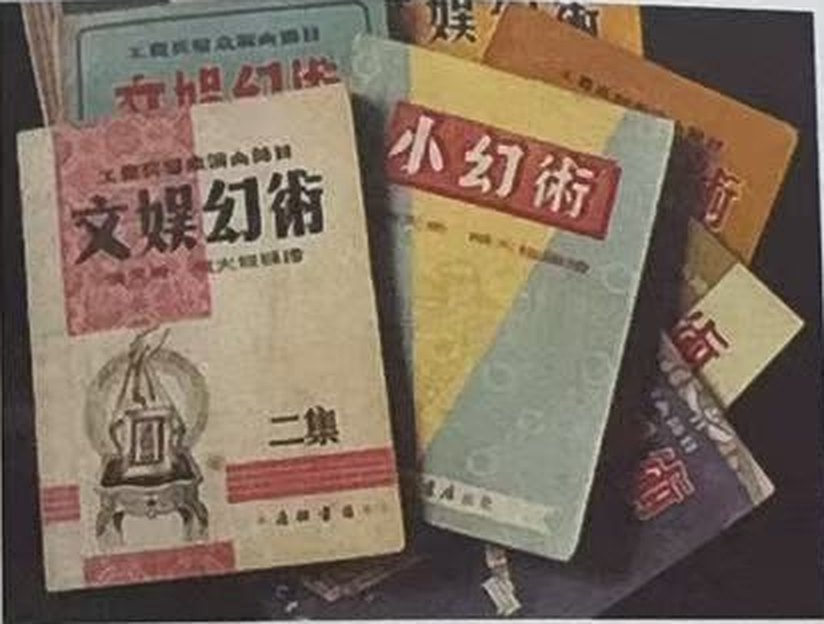
The 1950s, the first years of the new republic, were his most productive for popular books on illusion. He wrote New Magic for Children, Little Magic, Short Plays in Magic and others that found a wide readership; in particular the eight-volume Magic for Recreation, produced with Xiong Dazhen and published by the Guoguang Book Company in Shanghai, was taken up as teaching material by works unions, clubs, army units and village arts groups, and did much to spread the art.

The brothers Fu Tianzheng and Fu Tianqi opened the way for Fu-family illusion, each leaning a different way between scholarship and practice:Fu Tianzheng carried on the northern school of the Han line, Fu Tianqi worked chiefly in the southern school of the Mo line; Fu Tianzheng was strong in literature and history and prolific in theory, Fu Tianqi had the deeper hand in art and produced the popular books. In 1957 the two compiled a study of two famous pieces of Chinese conjuring, The Immortal Plants the Beans, and the Nine Linked Rings, gathering the techniques of both schools in one place; magicians speak of it still. What the family calls taking the best from every quarter began, first of all, between two brothers.

Mo Wuqi, his master, taught him more than the southern manner: he also worked with the elder brother Fu Tianzheng and gave every help in building a set of large apparatus — the sheep cage, the flying bed, the red-heart box, the immortals’ painted cabinet, the great duck vase, the carrying box, the division box, the triple-cangue box. That the Universal Illusion Society could mount “New Wonders of the Age” in 1937 owed much to this doyen of the southern school. When the programme opened in Chengdu the three leads on stage were Fu Tianzheng, Fu Tianqi and Cai Yihua; the two brothers, one of the north and one of the south, stood on the same boards.

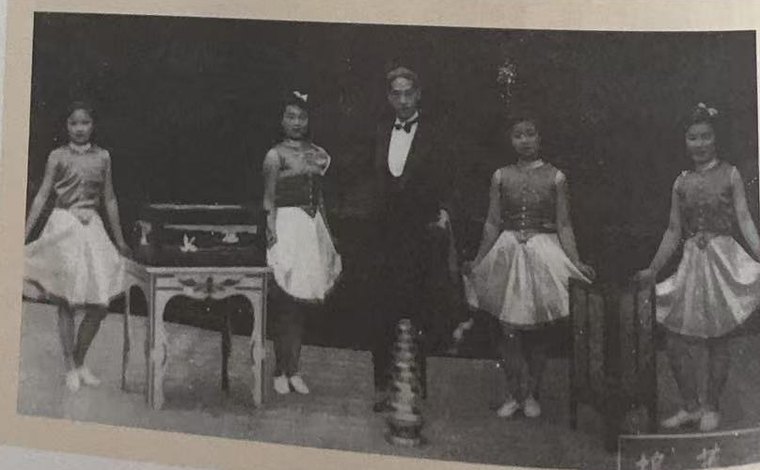
Stage photograph: a man standing at centre with four women assistants to either side
Fu Tianqi in Hong Kong performing his reworked illusions The Vanishing Duck and Duozi Hulu · from the book on Fu-family illusion
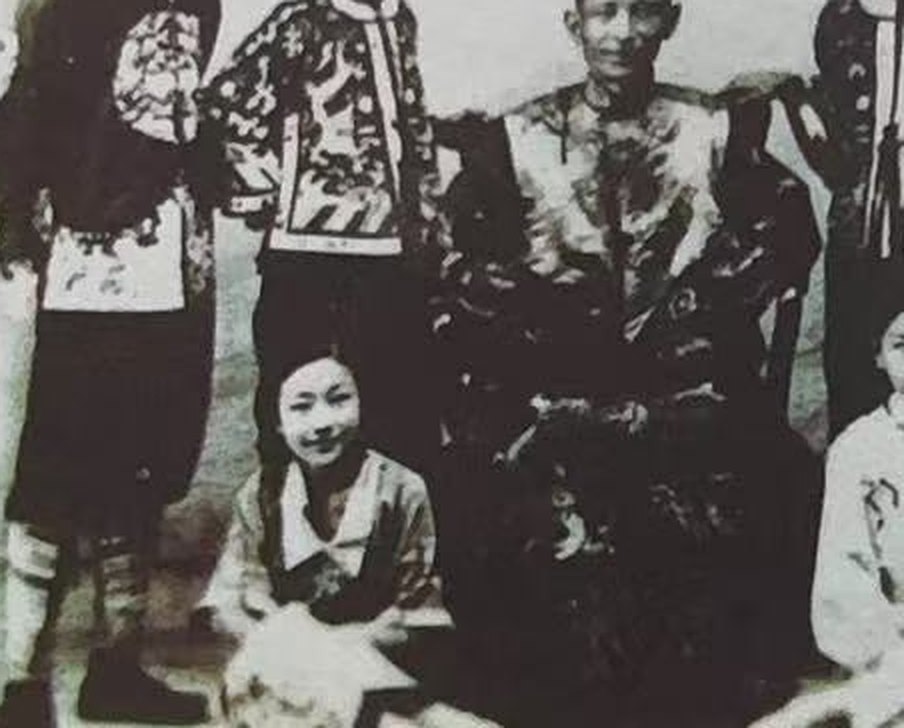
An old photograph: an older man seated at the centre, six assistants in embroidered costume behind and beside him
Mo Wuqi (seated, centre) with his assistants · from the book on Fu-family illusion
Several old book covers laid open and overlapping, among them Magic for Recreation and Little Magic
Some of the books written by Fu Tianqi · from the book on Fu-family illusion

Third Generation

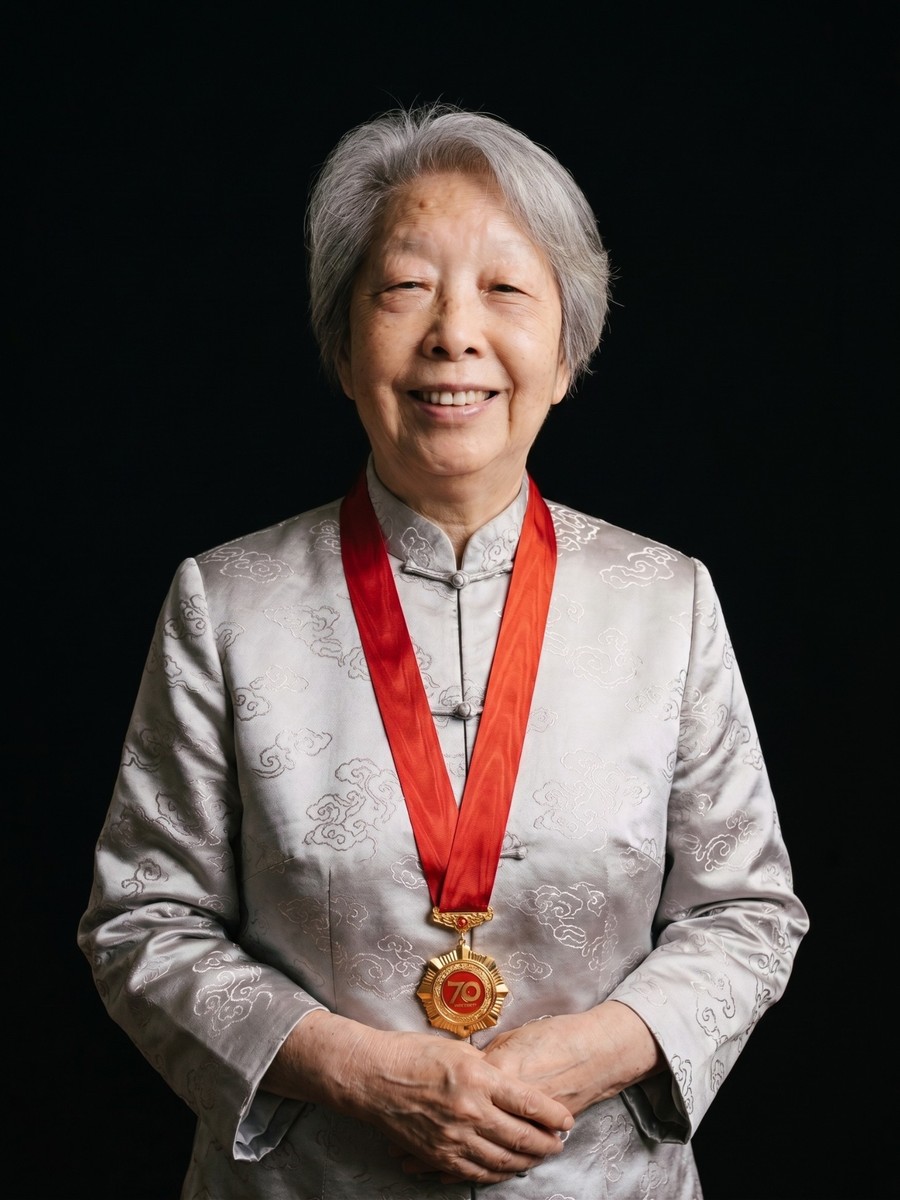
Portrait of Fu Qifeng: silver-grey short hair, a pale grey cloud-patterned mandarin-collar jacket, a red ribbon at her neck, dark ground

Fu Qifeng

March 1939 — 10 July 2025 · eldest daughter of Fu Tianzheng · scholar of illusion, acrobatics and the puzzle arts · called by her peers the encyclopaedia of the acrobatic world

On the afternoon of the fifteenth day of the third lunar month of 1939, in Chengdu, deep behind the lines of the war, Japanese aircraft came over like locusts and the air-raid sirens rose across the city; and at that hour a child was born — Fu Qifeng, eldest daughter of Fu Tianzheng. From birth she went with her parents to the shelters and from town to town as they performed, yet she was strong: she was speaking at eight months, and at little more than two she was on the illusion stage with her father at fund-raising performances. When she was produced from a piece of apparatus made to look like a donation box, she would raise her small fist and shout “Down with the invaders!”, and the whole house would rise with her.

From her father’s generation she took the belief that illusion is not street trickery but an art with deep wit and cultivation in it. As a child she often performed with her younger brother Fu Tenglong, and at fourteen was made first deputy head of the young people’s company at the Shanghai Children’s Palace. In 1953, when her father’s experimental society was short of hands, she finished middle school and went straight to work with him, becoming his right hand in performance, creation, research and making, and one of the third generation of Fu-family illusion. In 1960 she was selected to Beijing by the China Acrobatic Troupe and, as a new talent in its magic section, performed several times at Zhongnanhai; when the hard years came and the magic section was merged with the stage section and half the performers cut, she was moved to the troupe’s reference office. The old head of the troupe, A Liang, said to her: “This troupe has plenty of performers and few researchers; your family has the learning — you should take up the pen.” Words meant only as consolation set the direction of her life.

When her father died in 1972 the whole family swore to finish what he had left undone. The Fu brother and sister began preparing to write A History of Chinese Acrobatics; by 1984 the first outline history, Chinese Acrobatics, was published by the Tianjin Science and Technology Press, and after that she and the family produced five further volumes, independent but related, some issued in English and Japanese editions. In 1980, when the China Federation of Literary and Art Circles was preparing to establish the China Acrobats Association, she was seconded to the drafting group — the association’s first application, first constitution, first work report and first press release all bear her hand; at the same time she took on the founding of the magazine Acrobatics and Magic, often carrying manuscripts to Shanghai to edit and to Tianjin to print. She edited books and the magazine at the association for more than twenty years, spent eight of them stretched between two posts, and did not mind the raises and promotions she missed.

When the 24th world magic convention opened in Beijing in 2009, how to show Chinese illusion to the world was the thing she cared about most: the China Acrobats Association asked her to prepare an exhibition of Chinese magic photographs, and the magic club of the Beijing Acrobats Association asked her to compile Classical Chinese Illusion: Sword, Cinnabar, Bean and Ring — two loads on one shoulder. After more than a year of work there was no fee, and the twenty thousand yuan she had advanced for printing never came back; she did not mind. She performed, created, researched, wrote criticism and taught for close to seventy years, wrote Illusion in Ancient China, A History of the Chinese Performing Arts and Astonishing Feats Explained among others, and had a hand in compiling more than forty books on illusion;she trained a succession of fine women conjurors, among them Deng Baojin and Ruxianguli. They came to learn from her from nearby — Beijing, Tianjin, Shandong, Henan — and from far off — Xinjiang, Tibet, Qinghai, Heilongjiang, Gansu, Ningxia. In the seventies and eighties everyone was poor, and when a young visitor could not afford to stay she would often have them live in her own house so they could practise close at hand. To this day those people are moved when they remember how much she gave them.

It has been observed that a trade handed down by blood rarely lasts beyond three generations; that Fu-family illusion passed down at all, in a thin generation, owes much to the steadiness of someone like her. She told the family more than once that applying for the listing was not meant to raise a monument to the Fu name, only to draw recognition, care and support to illusion as a heritage in itself. The book calls herthe steadfast guardian of Fu-family illusion。

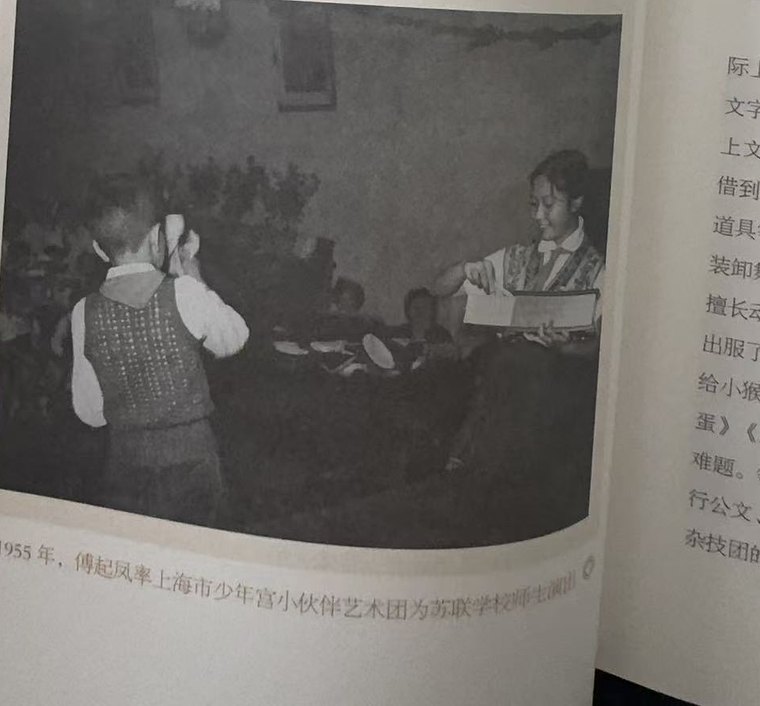
An old photograph: a girl performing at a table, a boy watching with his back to the camera
1955: Fu Qifeng leading the Shanghai Children’s Palace company in a performance for Soviet pupils and teachers · from the book on Fu-family illusion
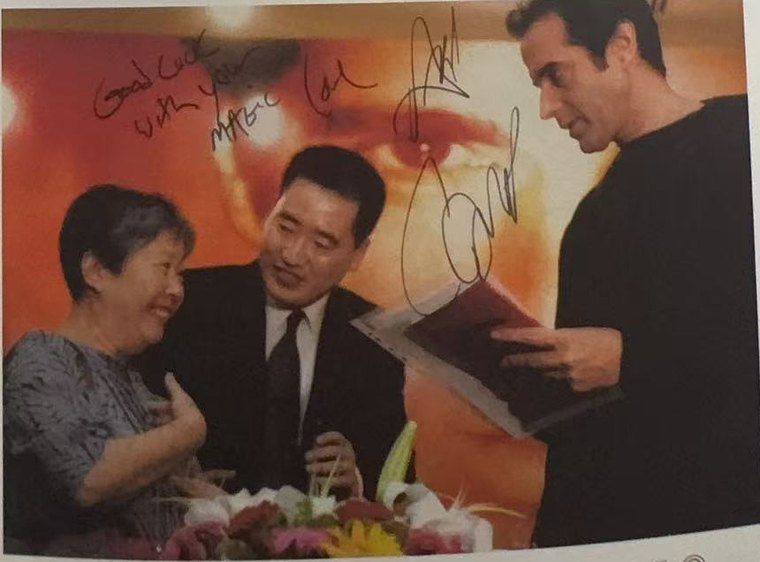
Three people in conversation, an English signature across the top of the picture
Fu Qifeng and Wang Zhiwei in conversation with the American magician David Copperfield · from the book on Fu-family illusion
Stage photograph: a cool blue-green set, performers ringing a lit square illusion cabinet
A stage production Fu Qifeng helped create for Happy Valley Shenzhen · from the book on Fu-family illusion
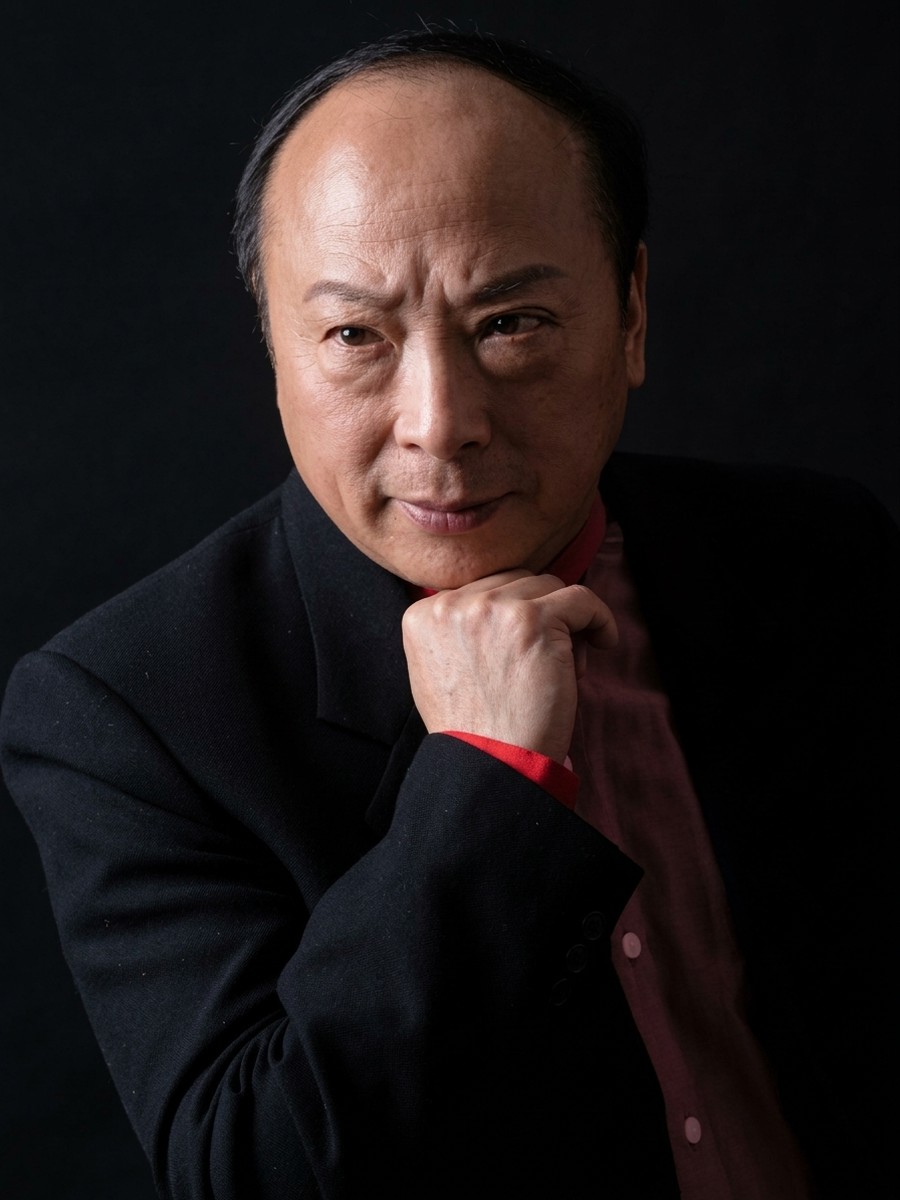
Portrait of Fu Tenglong: dark jacket, chin resting on his hand, dark ground

Fu Tenglong

August 1943 — present · son of Fu Tianzheng · younger brother of Fu Qifeng · national representative bearer of Fu-family illusion

Fu Tenglong learned from his father, Fu Tianzheng. In the reorganisation of 1958 the members of the family’s experimental society were all moved to other work; only his father, with him, went on into the newly formed Shanghai Magic Troupe — this father and son are the reason the line did not break. He later became the national representative bearer of Fu-family illusion; besides the national title, Beijing has issued him a municipal certificate as representative bearer. In 2022 he was named a lifetime achievement artist of acrobatics by the national federation.

A single length of rope shows best how this school passes down. In his youth Fu Tianzheng carried on the tradition of his master’s house, working several different cuts with one length of rope, involving the audience and then restoring the rope whole, often closing with the double burn — a classic of the northern school’s close-up work. The piece he created during the war, Unbroken, likened the long rope to the Great Wall, its breaks to the enemy’s attacks and its repeated mending to the will of the soldiers and people who resisted, answering the March of the Volunteers then on everyone’s lips; it became one of the pieces he always performed when raising funds.

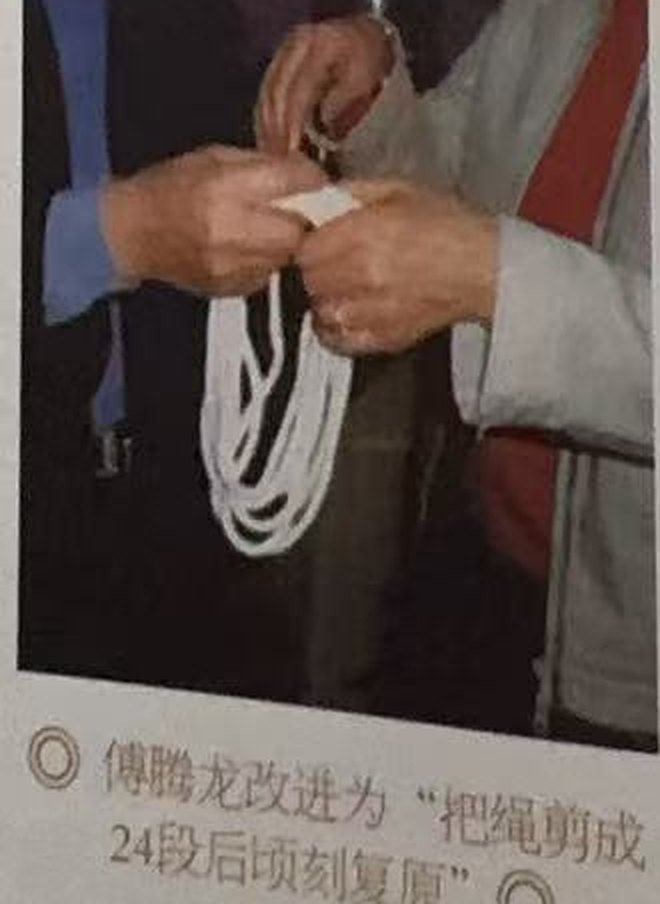
In Fu Tenglong’s hands the cut-and-restored rope became a teaching piece: he would open with the traditional Zhang Gong Cuts the Cord and reveal the method outright, so that the audience saw how it was done; and then, at that very moment, he would do it again — inviting the audience to cut the rope into twenty-four pieces, and restoring it on the spot. The arrangement is his own: the earlier revelation exists for the sake of what follows.To put the old art to present use, and to give it more to say, is what several generations of this family have been after.

He and his elder sister Fu Qifeng were partners from childhood: as a girl she often took the stage with him. After their father died, the brother and sister together took up his unfinished work on A History of Chinese Acrobatics, preparing to write it, and by 1984 had produced the first outline history, Chinese Acrobatics. One craft and one manuscript — the two of them carried a half between them for decades.

That skill he passed on in turn, by his own hand, to Ruxianguli.

Close-up: a pair of hands gathering a white rope length by length between the fingers
Fu Tenglong’s version: the rope cut into twenty-four pieces and restored on the spot · from the book on Fu-family illusion
Fu Tenglong and Ruxianguli, both in white gloves, facing each other and working a length of rope
Fu Tenglong teaching rope magic to Ruxianguli · from the book on Fu-family illusion
to be added

Fourth Generation

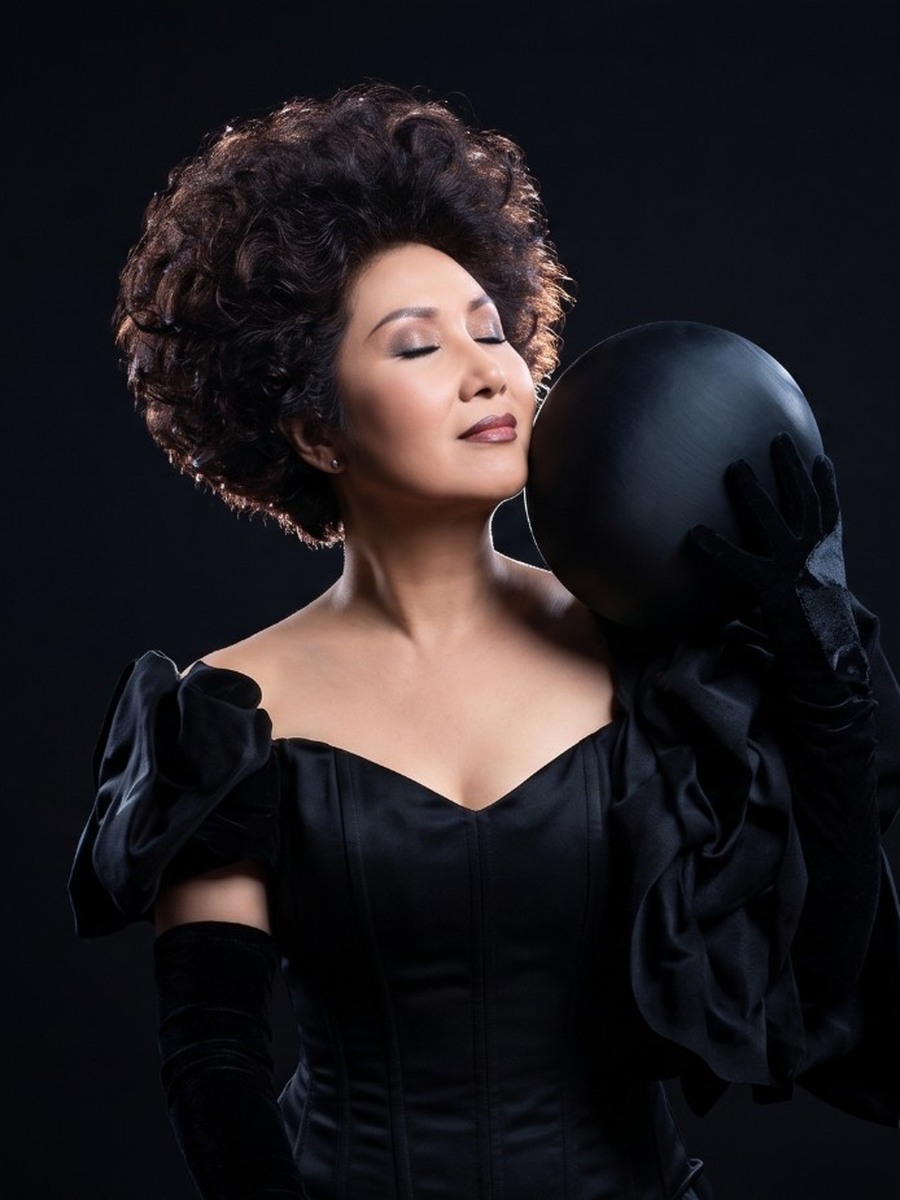
Portrait of Xu Qiu against a black ground: a black gown, eyes closed in profile, a black ball beside her

Xu Qiu

23 September 1962 — present · born in Beijing · daughter of Fu Qifeng · senior editor and deputy editor-in-chief of Acrobatics and Magic · deputy director of the Acrobatic Arts Centre of the China Federation of Literary and Art Circles

Xu Qiu was born in the years of hardship. During the Cultural Revolution her grandfather, her parents and her uncle, all of them in cultural work, were struck to varying degrees, and the households in Beijing and Shanghai alike were thrown into disorder: she was boarded with relatives, or fed at a neighbour’s table, or taken along to the cadre school. An unsettled life and severe asthma kept her from attending school as other children did, but she taught herself well and went back for the end-of-term examinations every year, and did well in them. Family and the strictness of her elders made the groundwork of illusion a required subject: the immortal planting beans, passing the pill under the moon, the nine linked rings, card work, silk work, rope work, bowl work, mouth work — she practised them all.

At twelve she was sent to her grandmother’s house in Shanghai, where her uncle Fu Tenglong trained her and oversaw an act she could take to an audition. Drawing on the old apparatus handed down in the family and adding ideas of his own, he designed and built her a medium-sized routine; but a child could not maintain and work so much apparatus, and back in Beijing her mother adjusted it to suit her and to suit what audiences then wanted of magic, so that it settled into sleight-of-hand work with handkerchiefs, red balls and playing cards. At fourteen she passed into an army performance unit, and at fifteen into the acrobatic section of the song-and-dance ensemble of the Railway Corps’ Political Department in Beijing, beginning a more professional life on stage. Beyond what the family taught her she set store by learning from older hands, and had guidance from Yao Jinfen, Tian Feiyan, Zhang Li and other teachers and friends.

She took up creative work early. Thematic illusion existed before her, but it mostly gathered existing pieces of a kind together; her thematic acts were different — designed afresh around a subject, new in both content and form. In 1980 she created the thematic piece A Fine Spring, trying to carry the public feeling of the day in a form of her own; it was invited into the 1981 gala of outstanding magic acts marking the founding of the China Acrobats Association, and she later spoke about it at the first national symposium on innovation in acrobatics. Linking Scarves and Dream Flowers followed; another of her best-known pieces is Light of the Asian Games. In the mid-1980s her ensemble sent her to the Chinese department of Fudan University in Shanghai for two years, and her graduating paper, On the Aesthetics of the Art of Magic, was commended by the Fudan professor and literary theorist Jiang Kongyang and by Wang Feng, Lan Tian and other senior figures of the China Acrobats Association.

In 1978 she formally joined the song-and-dance ensemble of the Railway Corps’ Political Department as a magician and acrobat; in 1995 she was graded a national second-class performer; in 2000 she moved to the magazine Acrobatics and Magic as editor and deputy editor-in-chief, and in 2010 was graded senior editor. She has published the professional books The Young Magician, Magic and Magic and Pseudoscience Distinguished, and with her articles in the press her published work runs to more than two million characters; her papers The Magician as Writer and Director and The Art of David Copperfield have both won national prizes for writing on acrobatics. She says that in this work duty outweighs liking — she cannot forget how, when her grandmother fell gravely ill in 1977, she hurried to Shanghai and practised balls and cards at the bedside every day, because only then could the old woman sleep; and at the end, it was to the chiming of her own nine linked rings that her grandmother quietly went.

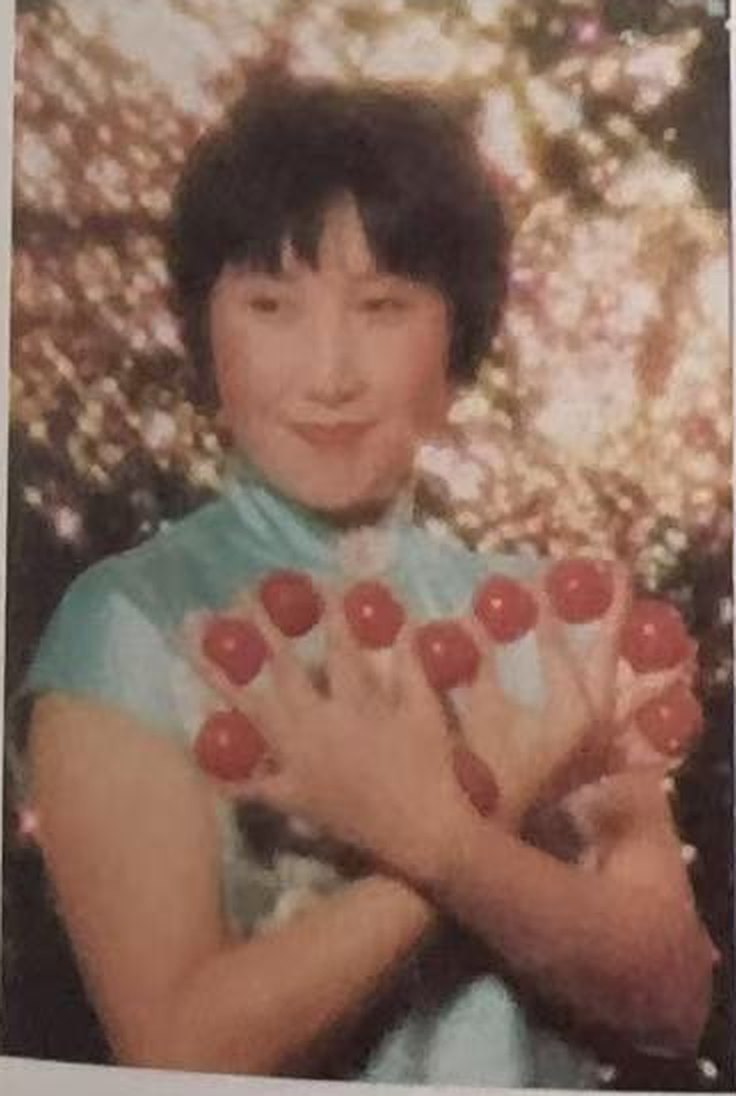
A pale green cheongsam, red balls held between interlaced fingers
Xu Qiu at practice on the traditional foundations of illusion · from the book on Fu-family illusion
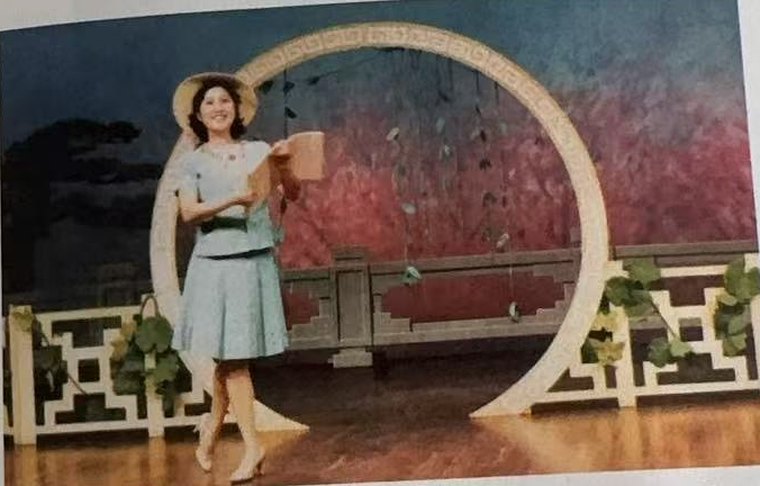
Stage photograph: before a moon-gate set, a performer in a pale blue suit holds a prop as petals fall
1981: Xu Qiu’s first performance of the thematic illusion A Fine Spring · from the book on Fu-family illusion
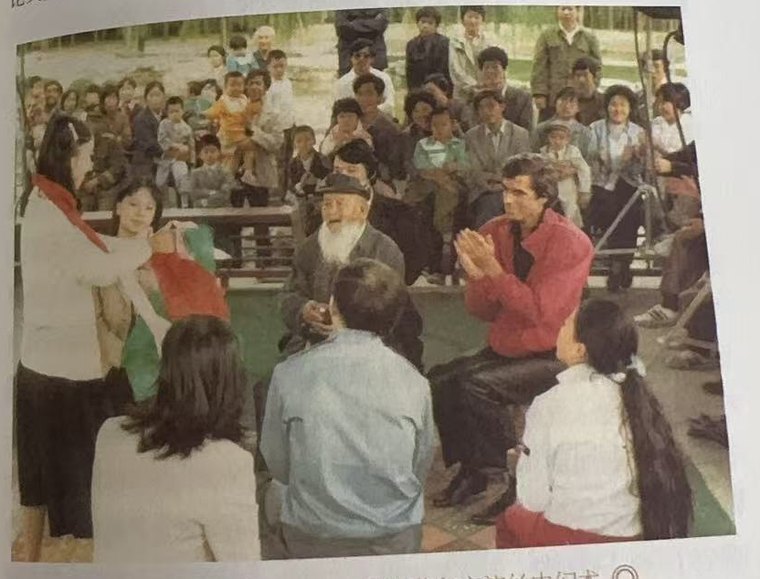
An open-air setting, two people comparing hand technique amid a ring of onlookers
1985: Xu Qiu and David Copperfield comparing scarf work · from the book on Fu-family illusion
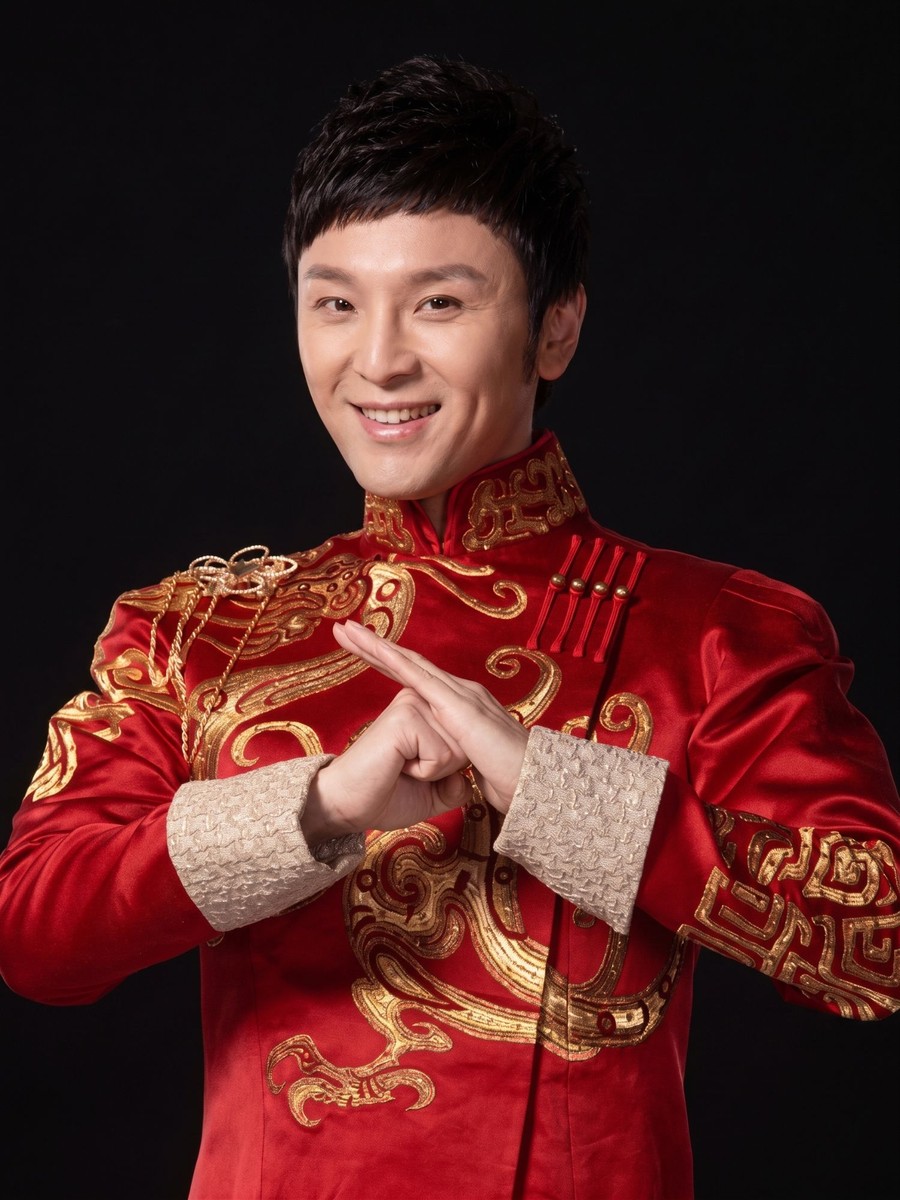
Portrait of Fu Yandong: red stage jacket with gold embroidery, hands clasped in salute, dark ground

Fu Yandong

1975 — present · son of Fu Tenglong · fourth generation of Fu-family illusion · of the same generation as Ruxianguli and Xu Qiu

Fu Yandong is the son of Fu Tenglong and a fourth-generation bearer of Fu-family illusion. He studied magic from childhood; he is a member of the International Brotherhood of Magicians and a director of the Chinese Magicians Association, and is known above all for large-scale illusions.

He has appeared many times on the Spring Festival Gala and the Lantern Festival gala of China Central Television, has led the magic segment of the CCTV programme Variety Show twelve times, and has performed on Happy China Tour five times. In 2007 his Disc of Light won the gold award in the stage-magic division of the Golden Chrysanthemum, the highest award for acrobatics and magic in China; in 2009 his Spirit of Blue and White won silver at the FISM world magic championships; and in 2011 his traditional piece Fish Every Year took first prize on the CCTV Spring Festival Gala. His other pieces include Telepathy, The Robe of Flowing Light and Swan of Dreams.

His grandfather Fu Tianzheng held the cut-and-restored rope to be a classic of northern close-up work; his father Fu Tenglong turned it into a piece of teaching. With him the school takes another road — the large illusion. Disc of Light, Spirit of Blue and White and Fish Every Year are all built stage pieces, resting on design, mechanism and the management of a whole stage rather than on the hands. That one school can keep a length of rope and also grow a full stage illusion is itself a footnote to the pairing of holding to tradition and bringing out the new.

Into the third and fourth generations the art was still passed chiefly within the family, while its bearers went on learning from teachers and friends inside and outside the trade — so it is not a closed room. Under Fu Qifeng’s steady encouragement the third and fourth generations did well in the intangible-heritage listings; she also told the family more than once that the listing was not meant to raise a monument to the Fu name, only to draw recognition, care and support to illusion as a heritage in itself.

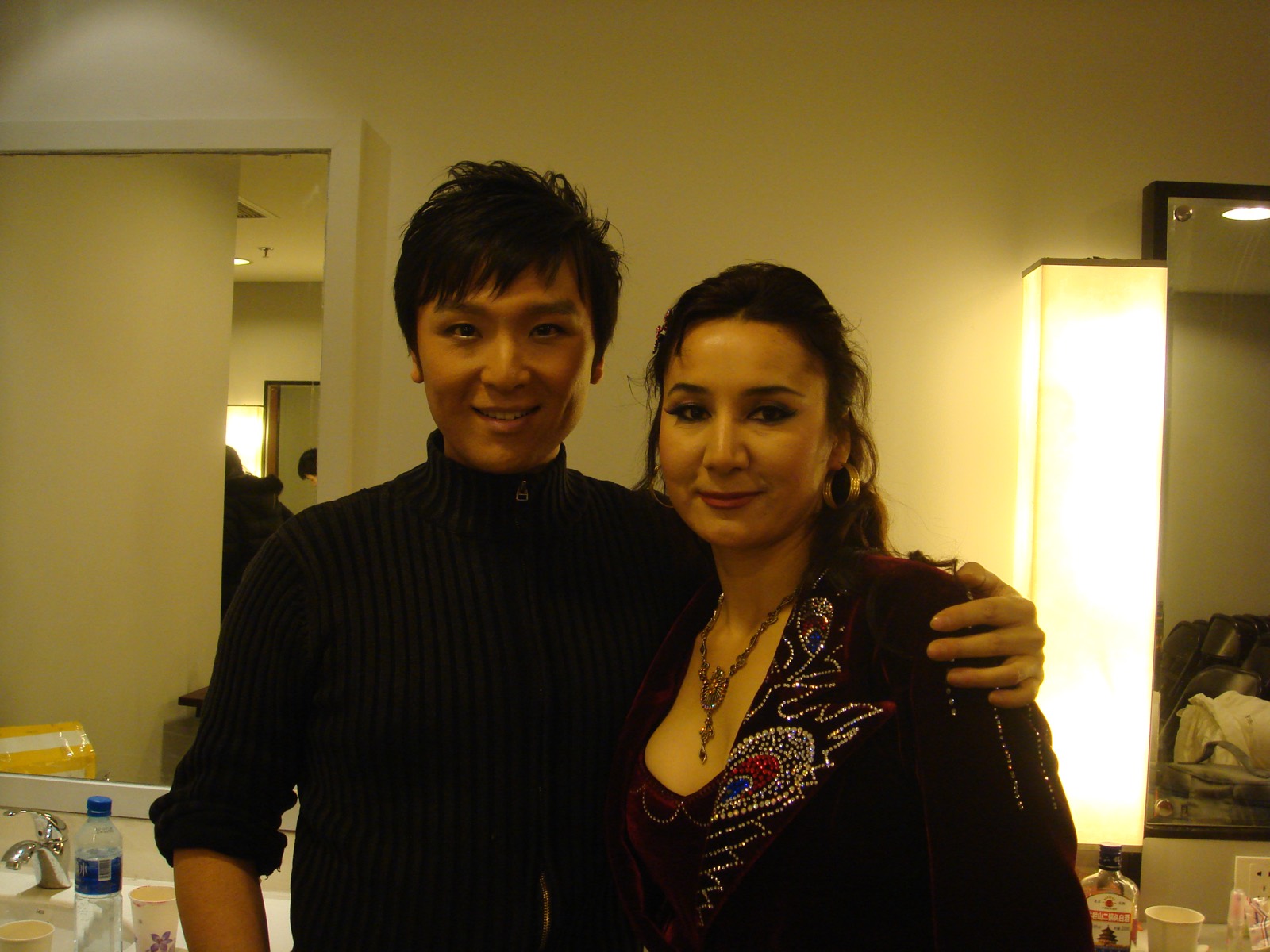
Dressing-room photograph: Fu Yandong in a dark polo-neck beside Ruxianguli in a deep red sequined costume
Fu Yandong and Ruxianguli
to be added
to be added
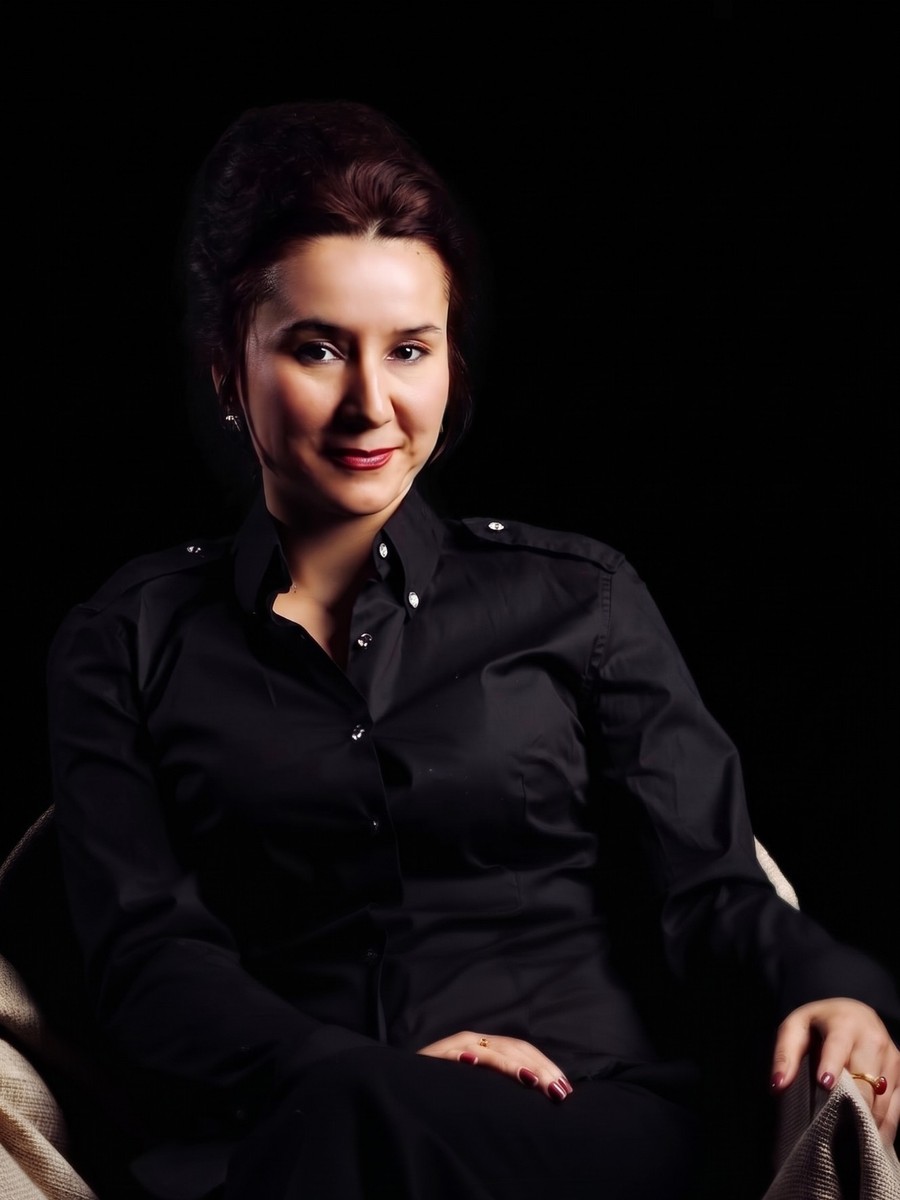
Portrait of Ruxianguli: a black collared shirt, hair pinned up, dark ground

Ruxianguli

fourth-generation bearer of Fu-family illusion · the Letter of Acceptance written by Fu Qifeng on 6 March 1993, signed and sealed by master and pupil

The art came to Ruxianguli by more than a single act of taking a teacher: this family taught her together. On 6 March 1993 Fu Qifeng wrote out the Letter of Acceptance in her own hand, signed and sealed by master and pupil — the one original document we hold that shows directly that Ruxianguli is of the fourth generation; the transcription and the photograph are in the act on the Letter above. The book says that Fu Qifeng “trained a succession of fine women conjurors, among them Deng Baojin and Ruxianguli” — her name is there in black and white.

Fu Qifeng was not her only teacher. The book carries another photograph, captioned as Fu Tenglong teaching rope magic to Ruxianguli — from Fu Tianzheng’s wartime Unbroken to Fu Tenglong’s twenty-four pieces restored on the spot, that line of rope work came down into her hands. She and Fu Yandong learned and grew up together.

The book says that they came to learn from Fu Qifeng from nearby — Beijing, Tianjin, Shandong, Henan — and from far off — Xinjiang, Tibet, Qinghai, Heilongjiang, Gansu, Ningxia; in the seventies and eighties everyone was poor, and when a young visitor could not afford to stay she would often have them live in her own house so they could practise close at hand. Ruxianguli was the one who came from Xinjiang — no blood relation of this family, yet taught as one of its own children. The line in the Letter of Acceptance — “I am willing to take you as my pupil, and to pass on to you with a whole heart what I have learned in decades of this art” — came down, in practice, to days like those.

She went south to Shenzhen afterwards, and carried the art onto the stage at Happy Valley. In her later years Fu Qifeng helped create Song of Dreams for Happy Valley in Shenzhen, and the book preserves that stage photograph — master and pupil meeting the same park one after the other, a footnote to this school’s journey from Beijing and Shanghai down to the southern coast.

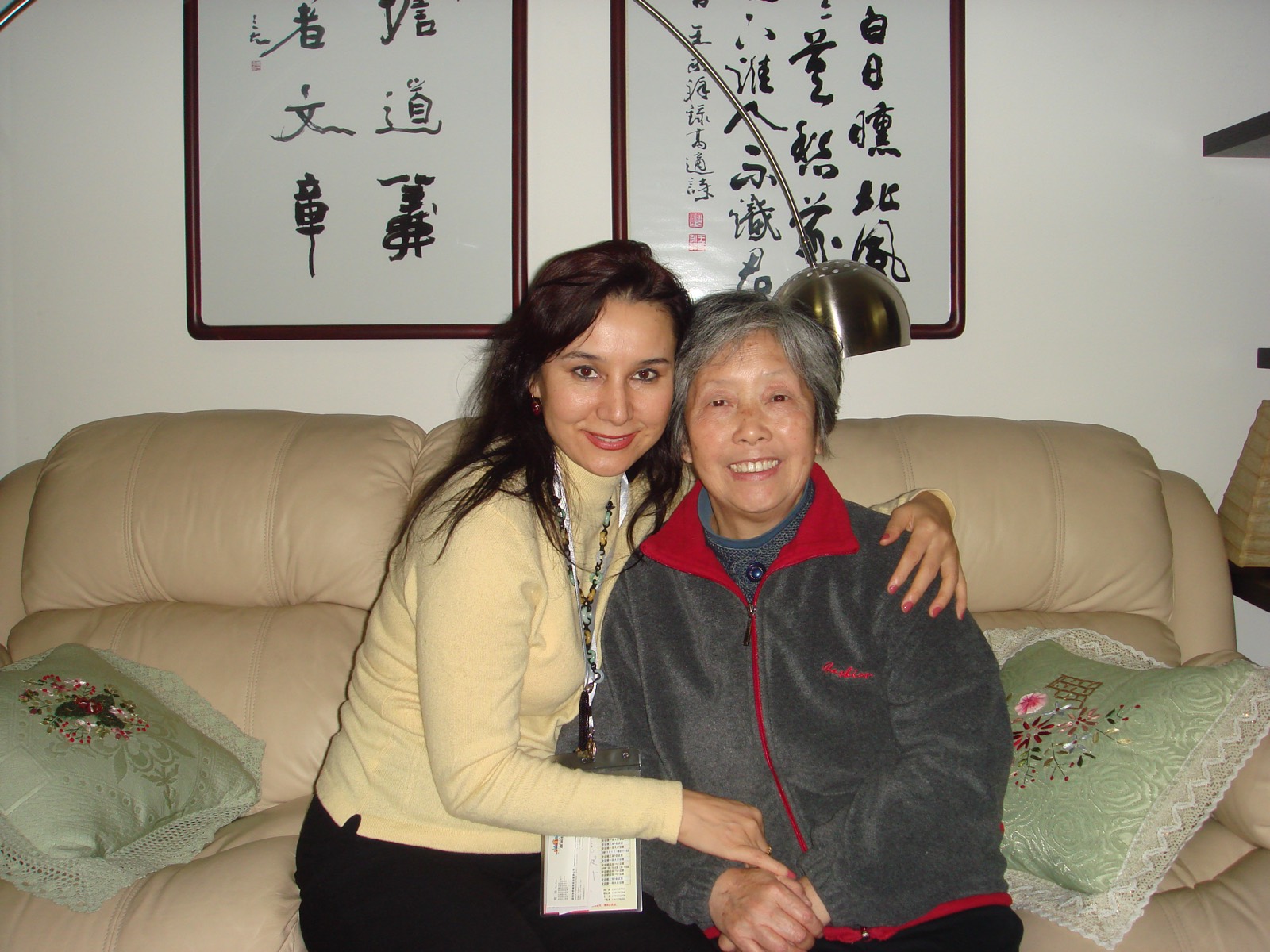
Indoors on a sofa: Ruxianguli in a cream cardigan with an arm around Fu Qifeng beside her, two calligraphy scrolls on the wall behind
Ruxianguli with her teacher Fu Qifeng
to be added
to be added

Inscription and Safeguarding

Act VI · Inscription

The safeguarding unit for this item is Fushi Yunji (Beijing) Culture Co., Ltd. National intangible heritage items are assessed periodically, and this one passed in 2019 and again in 2023 — in the list announced in October 2023, Illusion (Fu-family Illusion) was found compliant. What an assessment examines is not renown but whether the school is still being transmitted, and to whom.

Fu Tenglong holds the title at two levels: besides the national one, Beijing has issued him a municipal certificate as representative bearer of the Fu-family illusion. The national plaque was proclaimed by the State Council and conferred by the Ministry of Culture, dated November 2014.

In 2022 the representative inheritor Fu Tenglong was given the title Lifetime Achievement Acrobatic Artist by the China Federation of Literary and Art Circles. In 2025 the documentary record filmed with him as inheritor was screened, online and in person, in the seventh annual screening month for the national programme documenting representative inheritors of intangible cultural heritage. That documentation work does the same thing: while the people are still here, put the craft on film.

The pieces by which this school is known on stage are Dragon and Phoenix Treasure Hoop, One Heart, Illusion of Painting and Calligraphy, Telepathy, A Fine Spring, Spirit of Blue and White, Fish Every Year, Gecko Feat, Walking Upside Down, and Disc of Light. Their material shows where they come from: vessels, painting and calligraphy, blue-and-white porcelain, fish and spring are all familiar to Chinese audiences, while pieces such as Gecko Feat and Walking Upside Down rest on hard physical skill.

This list is not one person’s work. Disc of Light and Spirit of Blue and White come from Fu Tenglong of the third generation, and both were placed in competition; Unbroken, which Fu Tianzheng created during the war, is not on the list at all. The list records the pieces by which the school later became known, not every step it took — in more than a century this family has performed far more than ten titles.

Fu-family illusion is part of the acrobatic culture of Beijing. Its influence is not only on stage: successive inheritors founded societies, trained performers and wrote books, turning one family’s craft into a body of knowledge anyone can consult. That is what sets it apart from many itinerant crafts — it left something on paper, so those who came after need not guess. Fu Qifeng trained Deng Baojin, Ruxianguli and other women illusionists, and with them the school ceased to pass only within one family.

By the fourth generation the school is no longer only in Beijing. Ruxianguli carried its methods onto her own stage; that is why Fu-family illusion appears on this site at all. How far a school of illusion travels is measured not by how many props it owns, but by whether someone carries it on.

The register entries for this school — item number and code, the batch in which it was announced, the nominating district, the safeguarding unit and the representative inheritor — follow the published information of the national list of representative items of intangible cultural heritage; Fu Qifeng’s life, the family’s lineage and Unbroken follow her biographical chapter and the family’s own account. Where the two do not agree, this page sets them side by side rather than merging them.